Concepts in Shannon Weaver Model
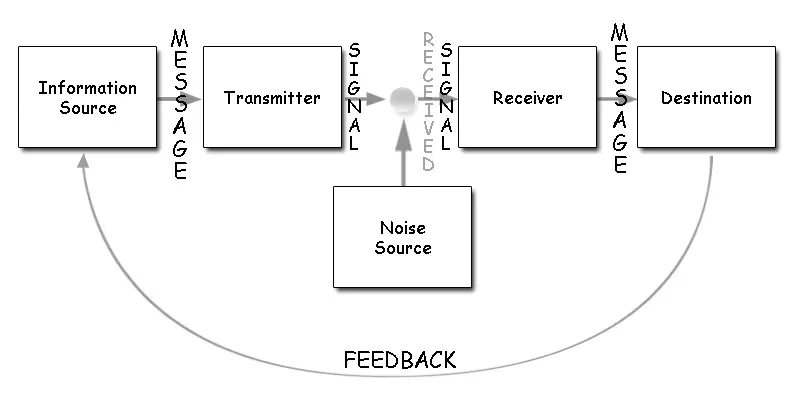
Sender (Information source)
The Sender makes the message, choose the channel and sends the message. A sender can send a message in different ways: it may be orally (through spoken word), in writing, through body language, music, etc.
Encoder (Transmitter)
An encoder can be a machine or technique, which converts message into signals or binary data. However, a person can communicate an idea with spoken words, written words, or sign language.
Channel
Channel is the medium used to send and receive information, from the sender and transmitter through to the decoder and receiver.
Examples of channel:
- A phone uses cables and electrical wires as their channel to transmit signals and binary data.
- The world wide web(medium) is used to send email.
- Sound waves from our voice carry the sound from the sender’s mouth to the receiver’s ear.
Noise
Noise disrupts information on its way from the sender to the receiver. There are two types of noise: internal and external.
- Internal Noise occurs on two points. Sender makes a mistake encoding a message. For example, sender misspell a word in a text message. Receiver makes a mistake decoding the message. For example, receiver misunderstood the meaning of an email.
- External Noise occurs when the message is affect by something not in the control of sender or receiver. For example, the noise of the vacuum cleaner affects the receiver listening to sender
Decoder is the machine or technique used to convert signals or binary data back to a message or the receiver who translates the message from signals.
Feedback
Feedback occurs when the receiver of the message responds to the sender in order to close the communication loop.
Example of Feedback occurs
- During a chat between friends
- When you write a reply email
- Through your facial expressions and body language during a conversation
However, Feedback does not occur in all situations. We may not communicate with each other while watching TV. We simply enjoy the show.
Is Shannon and Weaver Model complete?
No, The Shannon and Weaver’s (1954) model of communication is not complete.

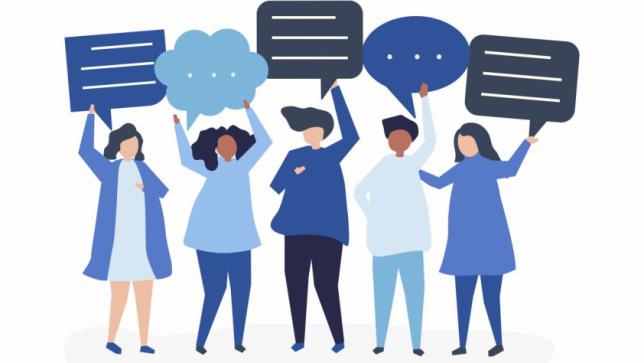
First, the Shannon and Weaver’s (1954) model did not describe one to many communication. One to many Communication is important in our everyday life. In daily life, conversation with more than one party is very common and crucial to interact others. Group discussion and meeting are common in workplaces to understand each other idea and helps work towards a common goal.
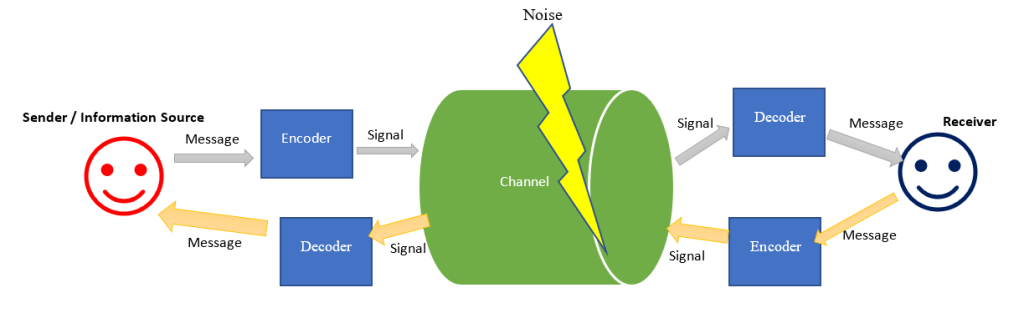
Second, the model does not describe sufficiently when the receiver reply the sender after information has been received. The model should show the receiver sent the message through the transmitter. The message received by sender from the receiver. Additionally, the message can be affected by the noise in the same way as sender sends message to receiver. Below is a diagram on improvement to the Shannon and Weaver Model.
Third, the model is unable to describe human emotions, body language and tone of voice to communicate.


Body language is the unspoken element of communication that we use to reveal our true feelings and emotions. A folded arm posture is defensive in nature and might indicate uncertainty or insecurity towards the other party. A person might nod and smile after every sentence shows he is very pleased and happy. Though there is no verbal response in both gestures, we can understand what the other party has to say.

Tone of Voice is the language we use, the way we construct sentences, the sound of our words and the personality we communicate. For example, the student is scolded by the teacher for being late. “Why are you late? Stand back for dentention today!”. From the tone, we know the teacher is angry.
Ideal Communication Model
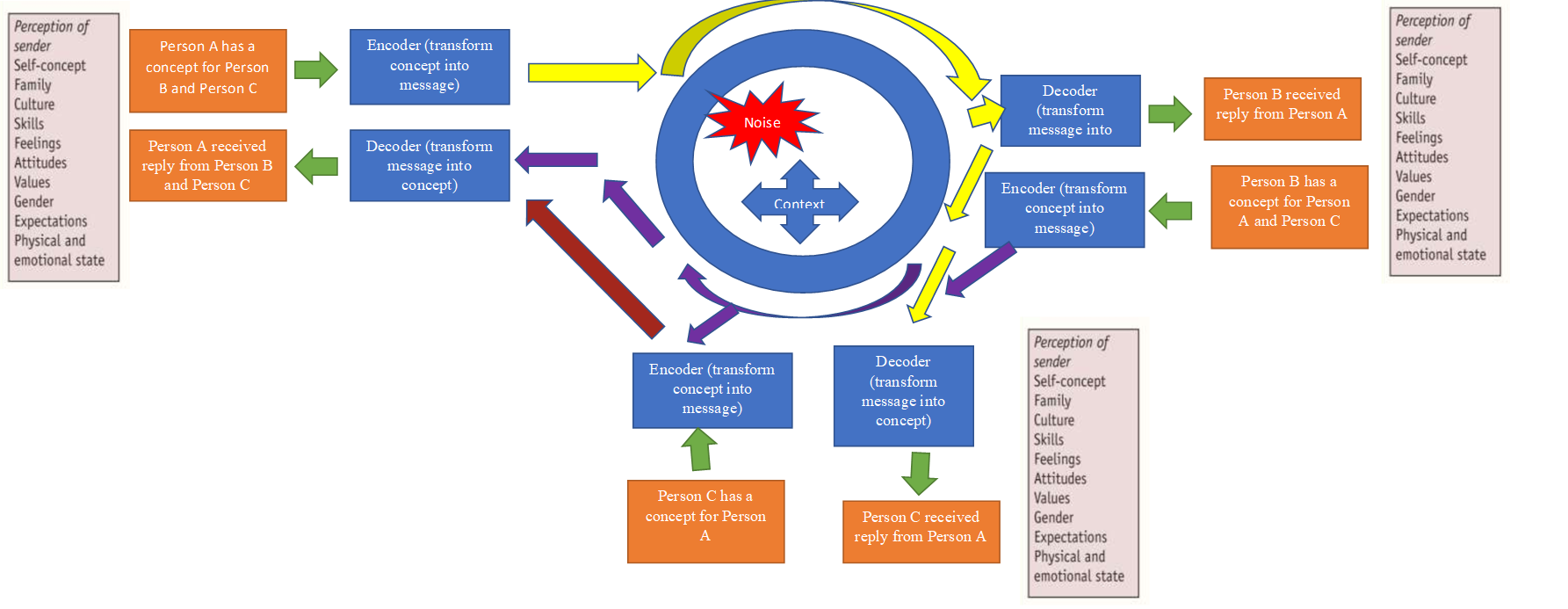
The ideal communication model allows interaction between multiple parties and translate the perception of a person. For example, Person A has a concept for Person B and Person C. The message is translated from a concept and sent the message to Person B and Person C through a channel. Person B and Person C has a decoder each. The concept is converted back from message and received by both person.
References
- https://helpfulprofessor.com/shannon-weaver-model/
- https://jlrlee002.wordpress.com/2019/07/12/is-shannon-and-weavers-1954-model-complete/
- https://www.communicationtheory.org/shannon-and-weaver-model-of-communication/
- https://www.mindtools.com/pages/article/Body_Language.htm
- https://cxl.com/blog/tone-of-voice/
 James's Blog
One reply on “Discuss if Shannon and Weaver’s (1954) model of communication complete?”
Hi James
I really liked this entry. You used many imageries for visualization and it really helps with getting the message across. I also liked how you answered the question directly and I felt that the points you brought up are quite interesting.
For your next blog post, you might want to avoid using lists as seen while you were explaining the concept of the Shannon and Weaver model.
LikeLike